DX11
Computer Graphics & Procedural Programmer
Github
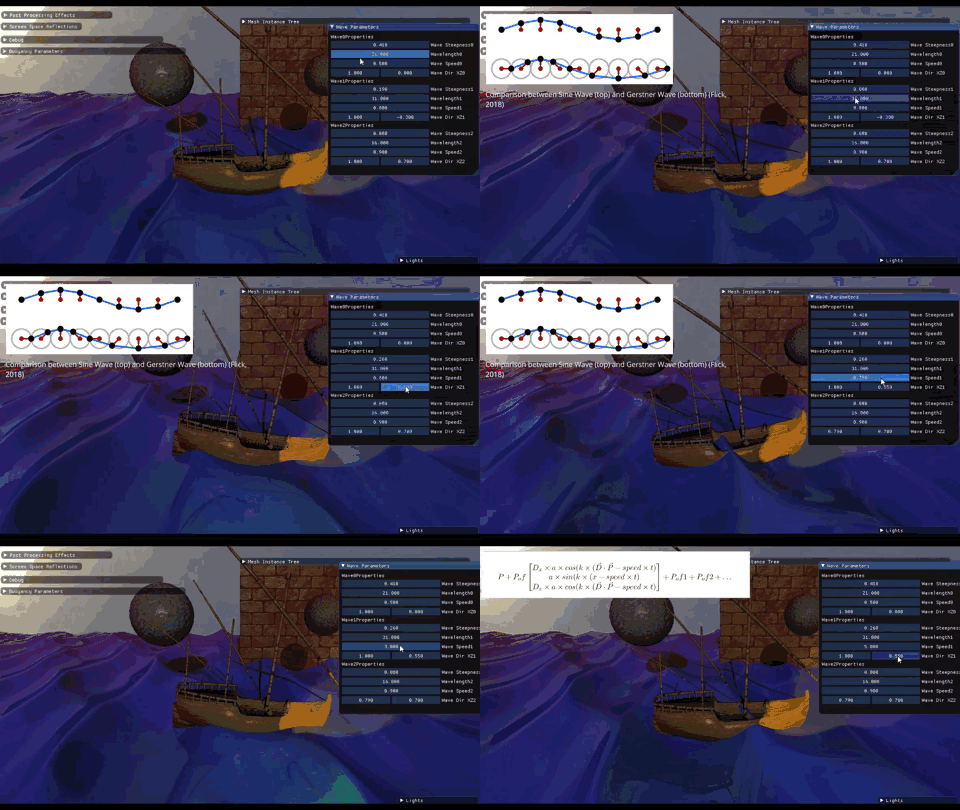
Water Simulation - Gerstner Waves
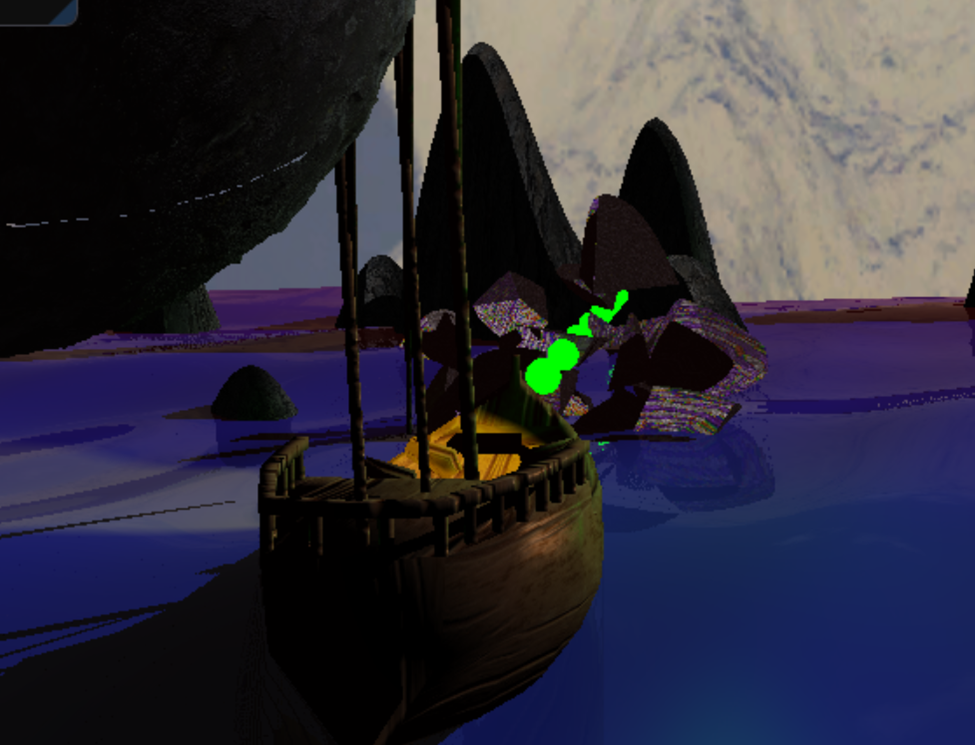
- Implemented a physically-inspired Gerstner Wave model in the domain shader to deform a tessellated water plane.
- Supports multi-layered waves with editable parameters: steepness, wavelength, speed, and direction.
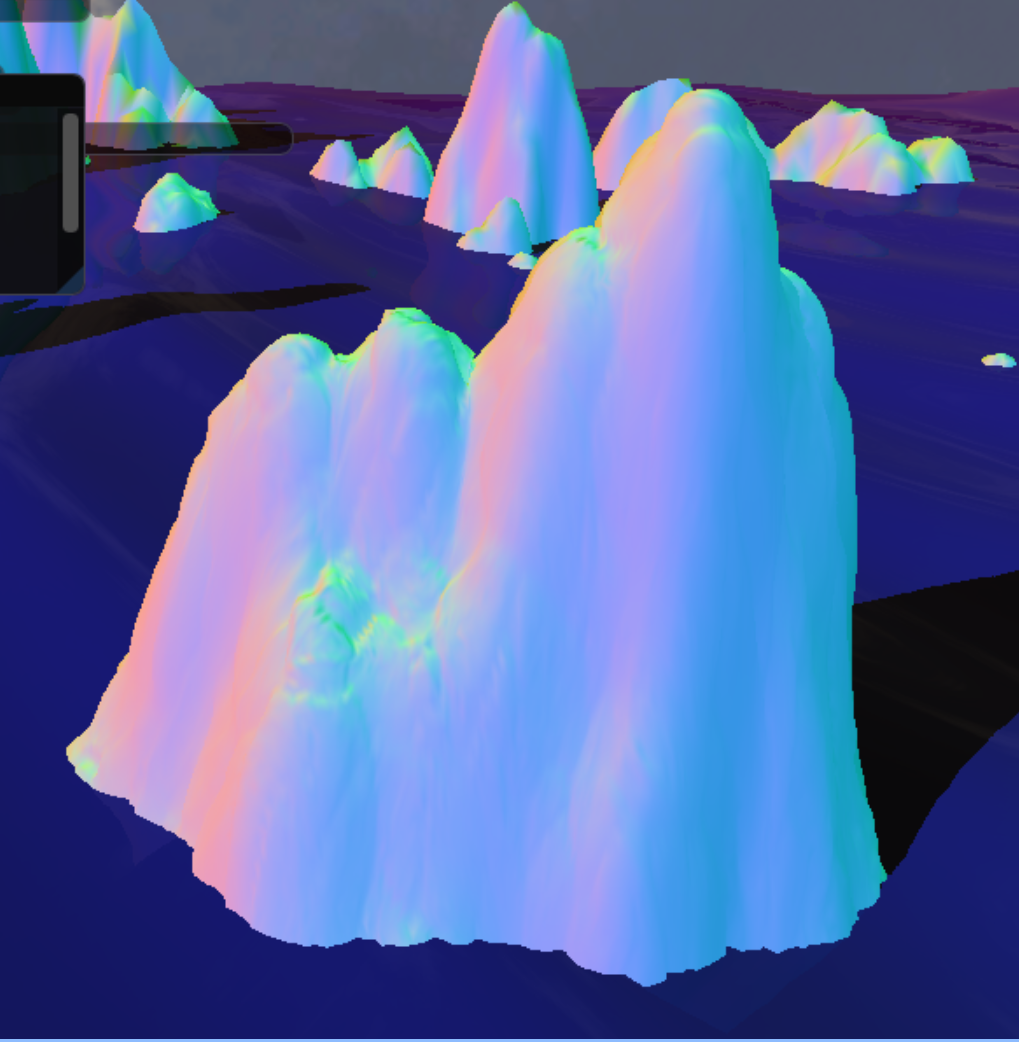
- Accurate vertex normal reconstruction was done using derived tangents and bitangents per wave layer to ensure proper lighting and shading.
Parallel Split Shadow Maps (PSSM)
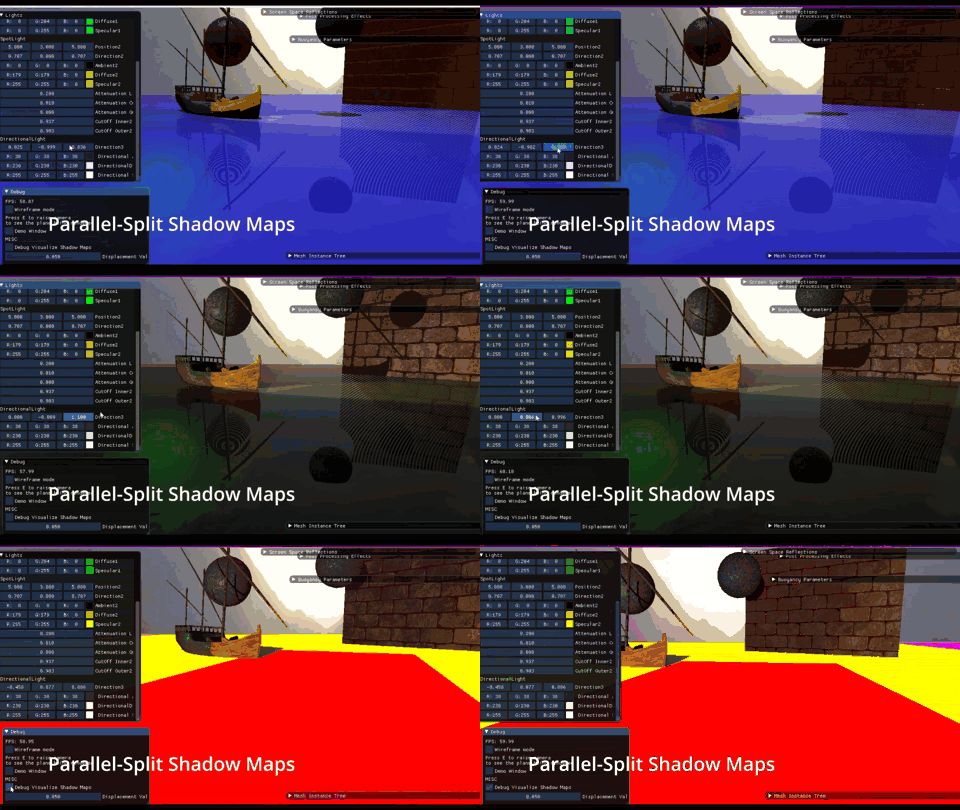
- Integrated Parallel Split Shadow Mapping (PSSM) for high-quality directional shadows with 3 cascade levels (near, mid, far).
- Each cascade is calculated using frustum slicing and orthographic projection aligned with the light direction.
- Light positions and properties fully configurable at runtime via GUI.
Compute-shader Buoyancy
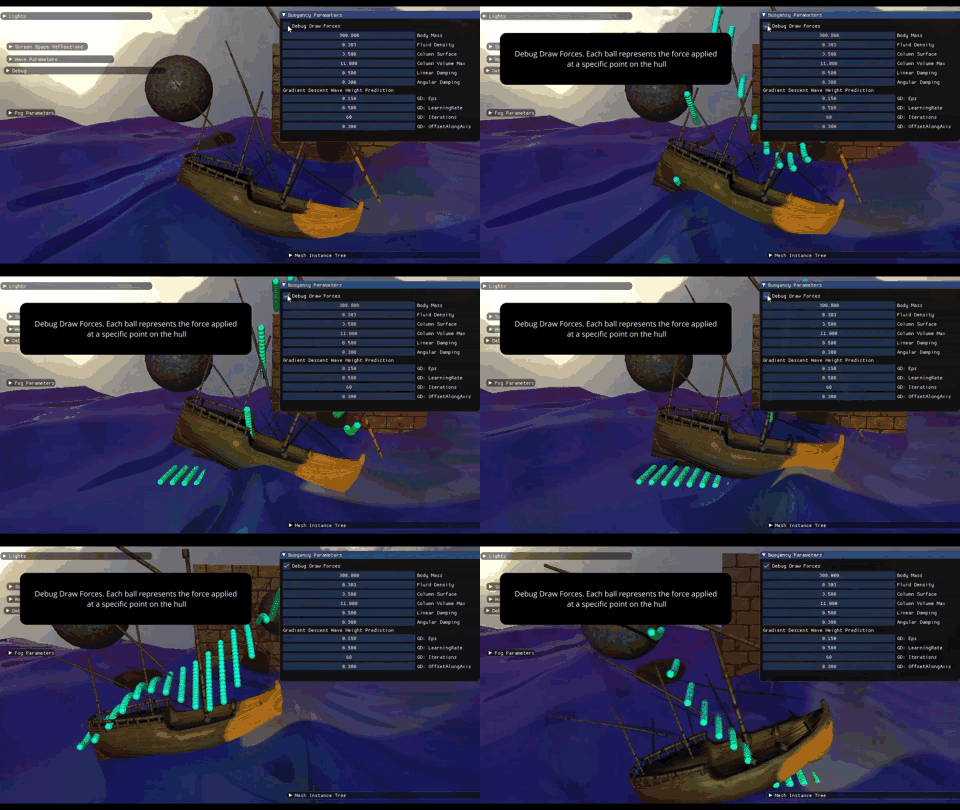
- The boat is physically represented by a rectangular Bullet3D body synced with the visible mesh.
- A grid of points is sampled across the bottom hull surface each frame.
- A compute shader evaluates each point using gradient descent to find the corresponding wave height (Gerstner waves require solving for vertical displacement, as they map 3D inputs to 3D outputs).
- The vertical distance between each hull point and wave surface is used to estimate displaced fluid volume and generate upward buoyant forces.
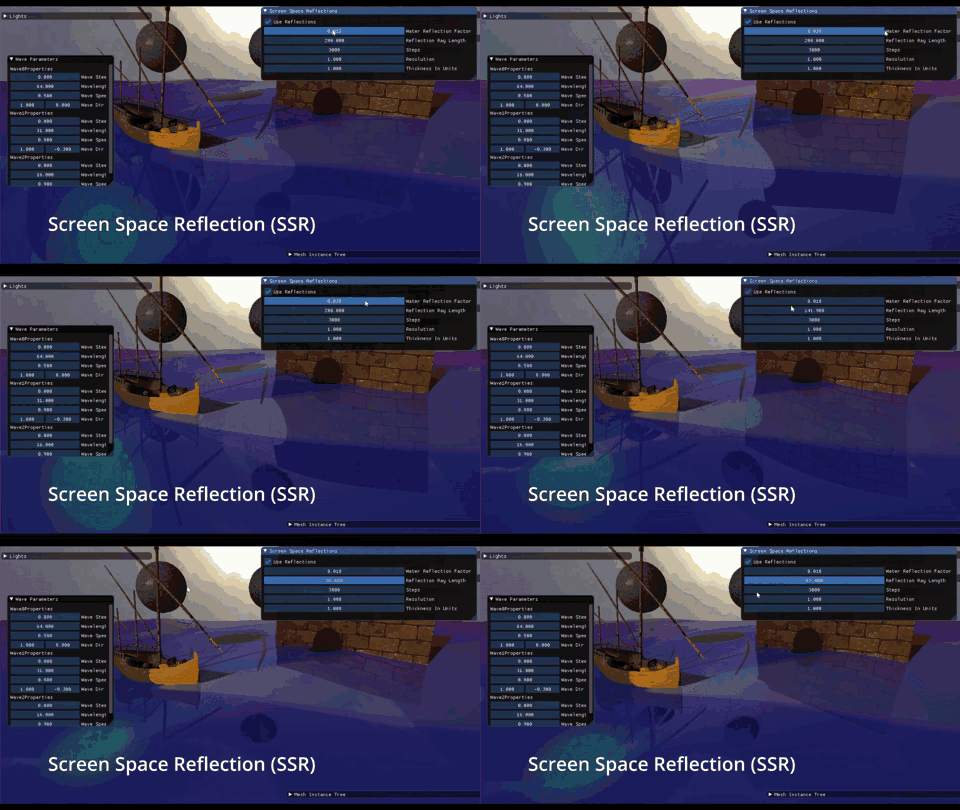
Screen-Space Reflection (SSR)
Realistic water surface reflections were achieved using a screen-space ray marching algorithm:
- Ray-marching in screen space with Digital Differential Analyzer (DDA) stepping to prevent over-sampling.
- Fallback to a cubemap-based skybox when rays leave the view frustum, avoiding visual artifacts at screen edges.
- Exposed fidelity controls (max steps, step size, reflection opacity) via ImGui interface for real-time tweaking and performance balancing.
Procedural Terrain With Procedural Destruction
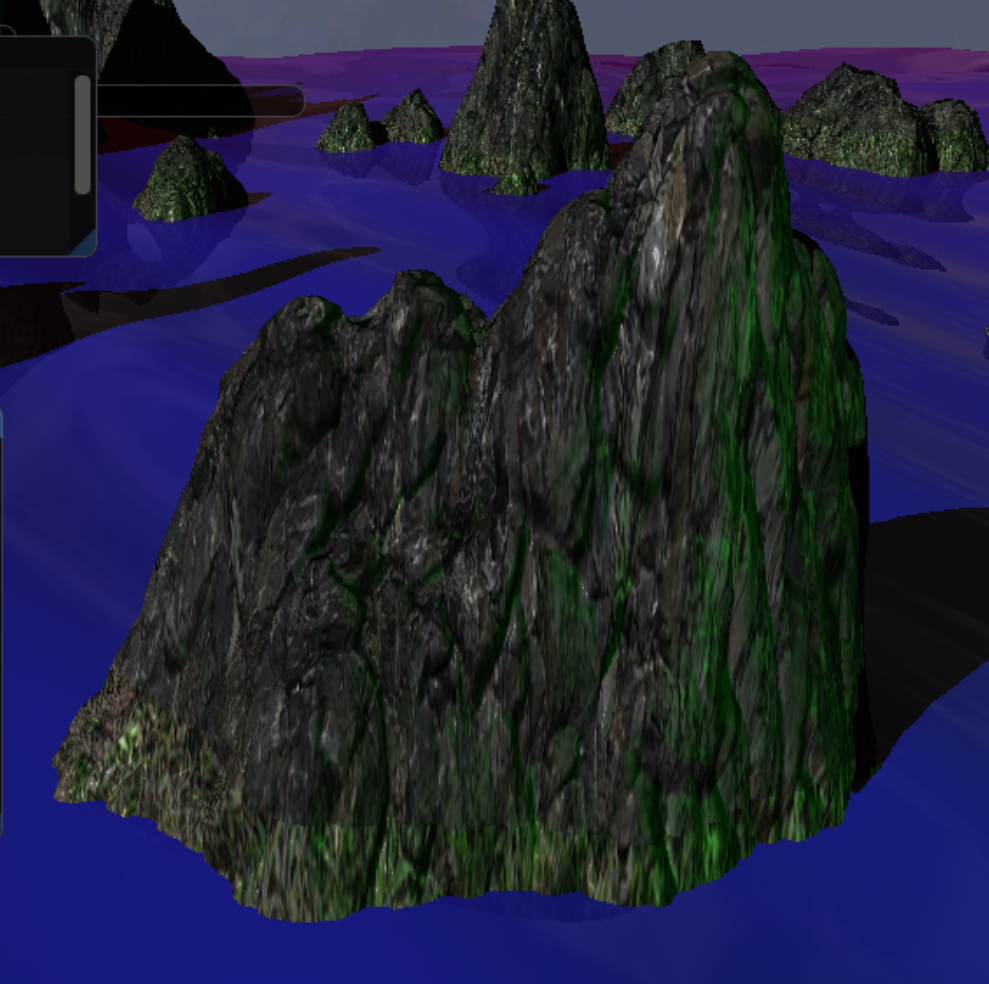
Terrain Generation
- Used fractal Brownian motion (fBM) to procedurally generate rocky peaks emerging from the ocean.
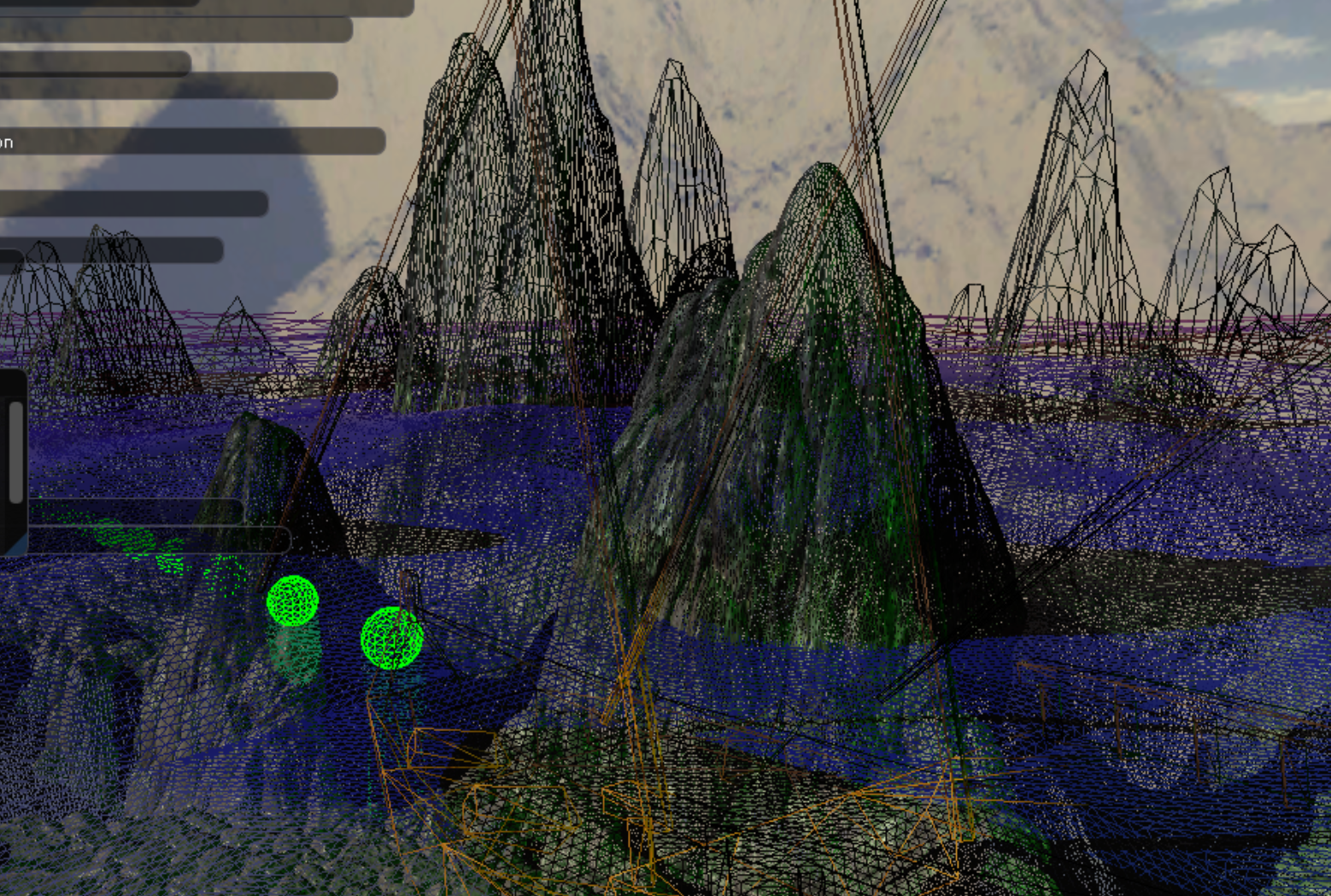
- GPU terrain is recalculated every frame using dynamic tessellation and vertex displacement.
- A parallel CPU mesh is generated once and partially recalculated only when geometry is altered (e.g., via cannon fire), enabling accurate ray-triangle intersections and collisions.
Destruction System
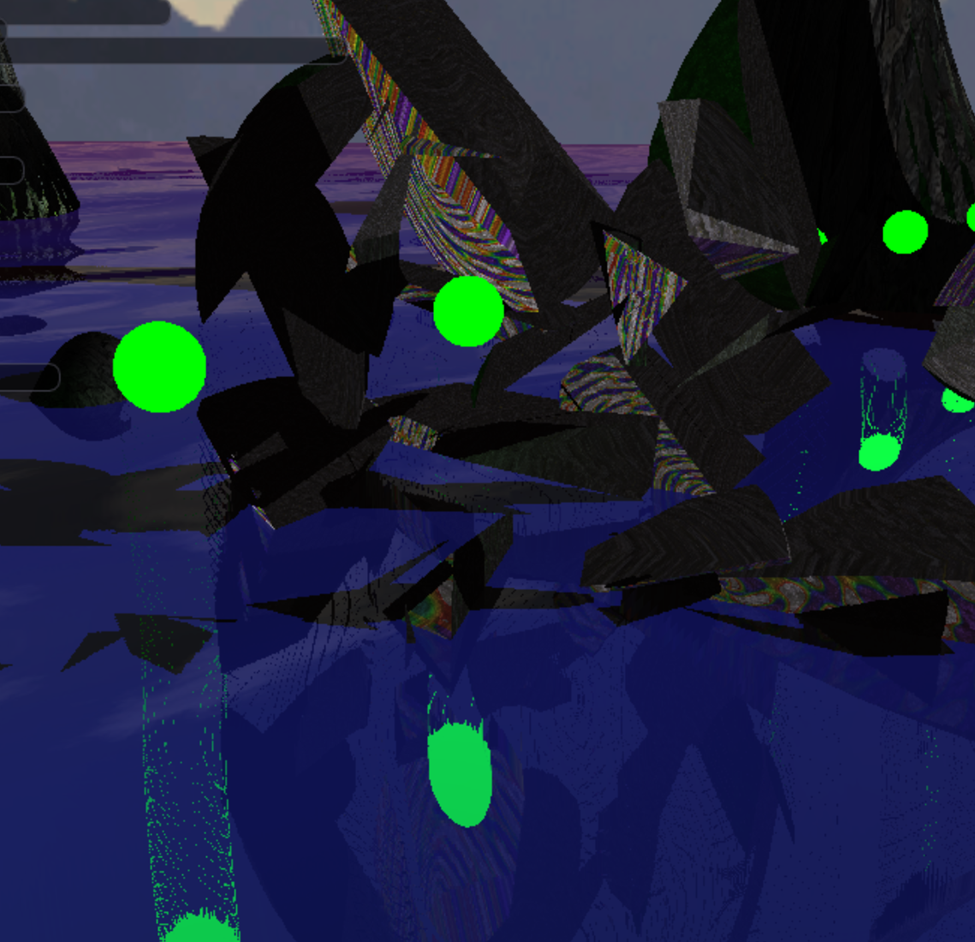
- When terrain is hit by a cannon, the affected mesh region is extracted and converted into a destructible fragment set.
- A sequence of randomly positioned and oriented splitting planes intersect the geometry and fragment it into jagged, rock-like chunks.
- Each internal face is automatically inverted and retextured to distinguish the interior from the original surface.
Retro Underwater Effect
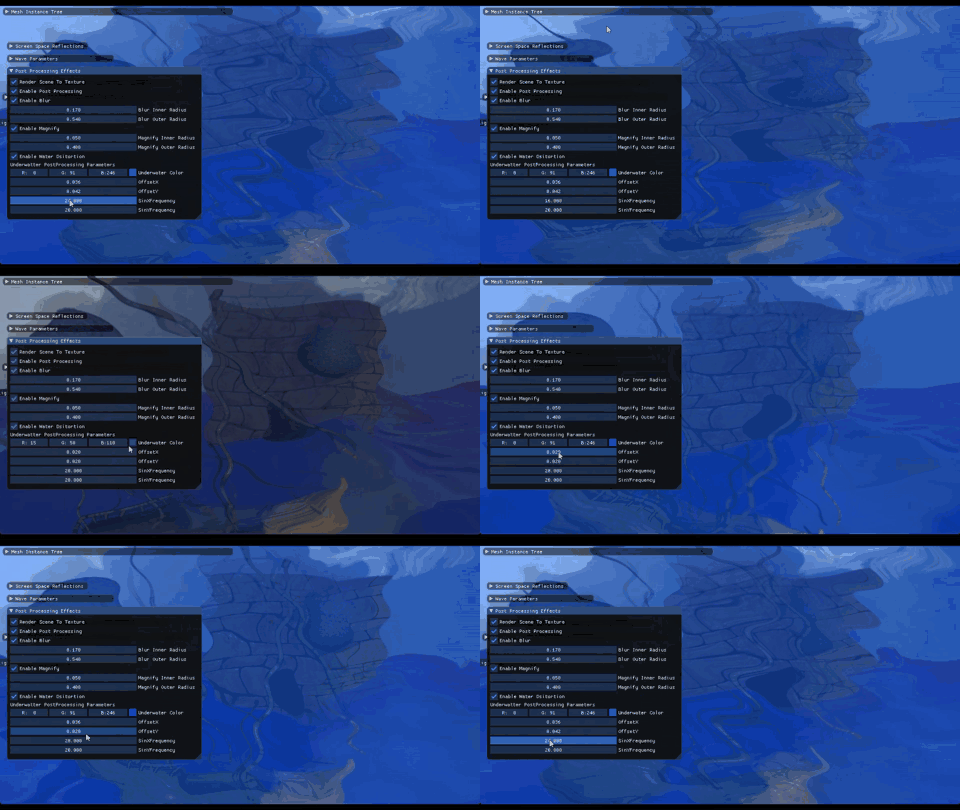
Achieved by combining various post-processing techniques:
- Edge Blur: Vignette-based Gaussian blur applied only to screen edges using dynamic radial masks.
- Water Distortion: Ripple effects applied via trigonometric distortion of UVs in the pixel shader.
- Color Tinting & Magnification: Simulated depth distortion with a center-screen magnifier using aspect-corrected circular masks.